> ## Documentation Index
> Fetch the complete documentation index at: https://docs.asymptotelabs.ai/llms.txt
> Use this file to discover all available pages before exploring further.
# Rapid7 InsightIDR
> Forward Beacon endpoint events into Rapid7 InsightIDR with a Custom Logs webhook event source.
## Forwarding Overview
Beacon `v0.0.25` added Rapid7 InsightIDR support for teams that want Beacon endpoint events in Rapid7 Log Search and investigations. Current Beacon releases write one local source of truth, the active [runtime JSONL log](/concepts/core-concepts#runtime-jsonl-log), and keep that handoff path bounded with local rotation. Your customer-managed shipper or deployment tooling owns Rapid7 webhook URLs, checkpointing, rotation handling, and retries.
Use this path when you want Beacon events forwarded to a Rapid7 InsightIDR Custom Logs webhook event source without storing Rapid7 webhook URLs in Beacon endpoint configuration.
## Runtime log paths
| Mode | Runtime log |
| ----------- | --------------------------------------- |
| User mode | `~/.beacon/endpoint/logs/runtime.jsonl` |
| System mode | `/var/log/beacon-agent/runtime.jsonl` |
Use system mode for MDM deployments so your shipper can tail `/var/log/beacon-agent/runtime.jsonl` without per-user home directory permissions.
## Rapid7 setup
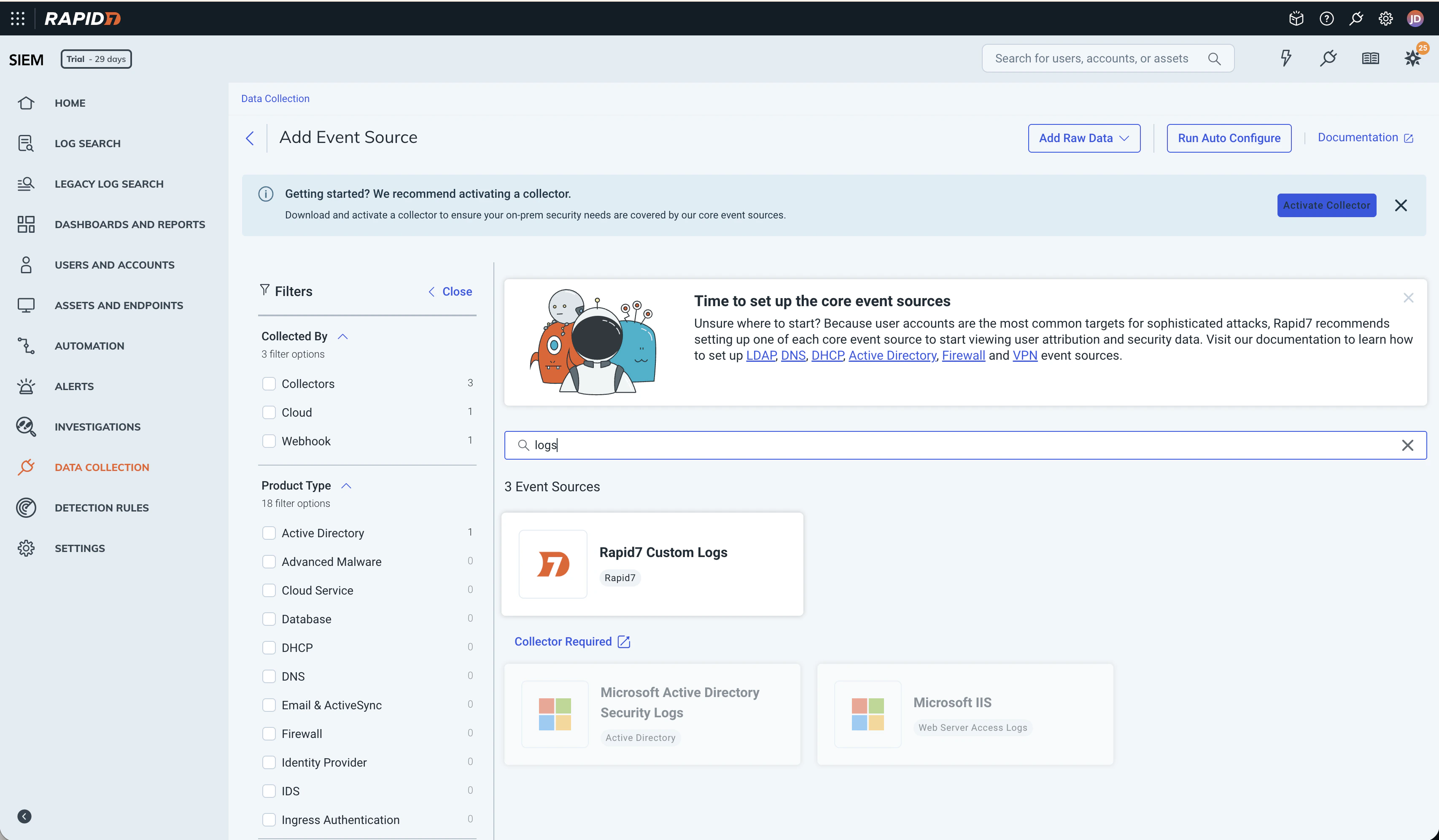
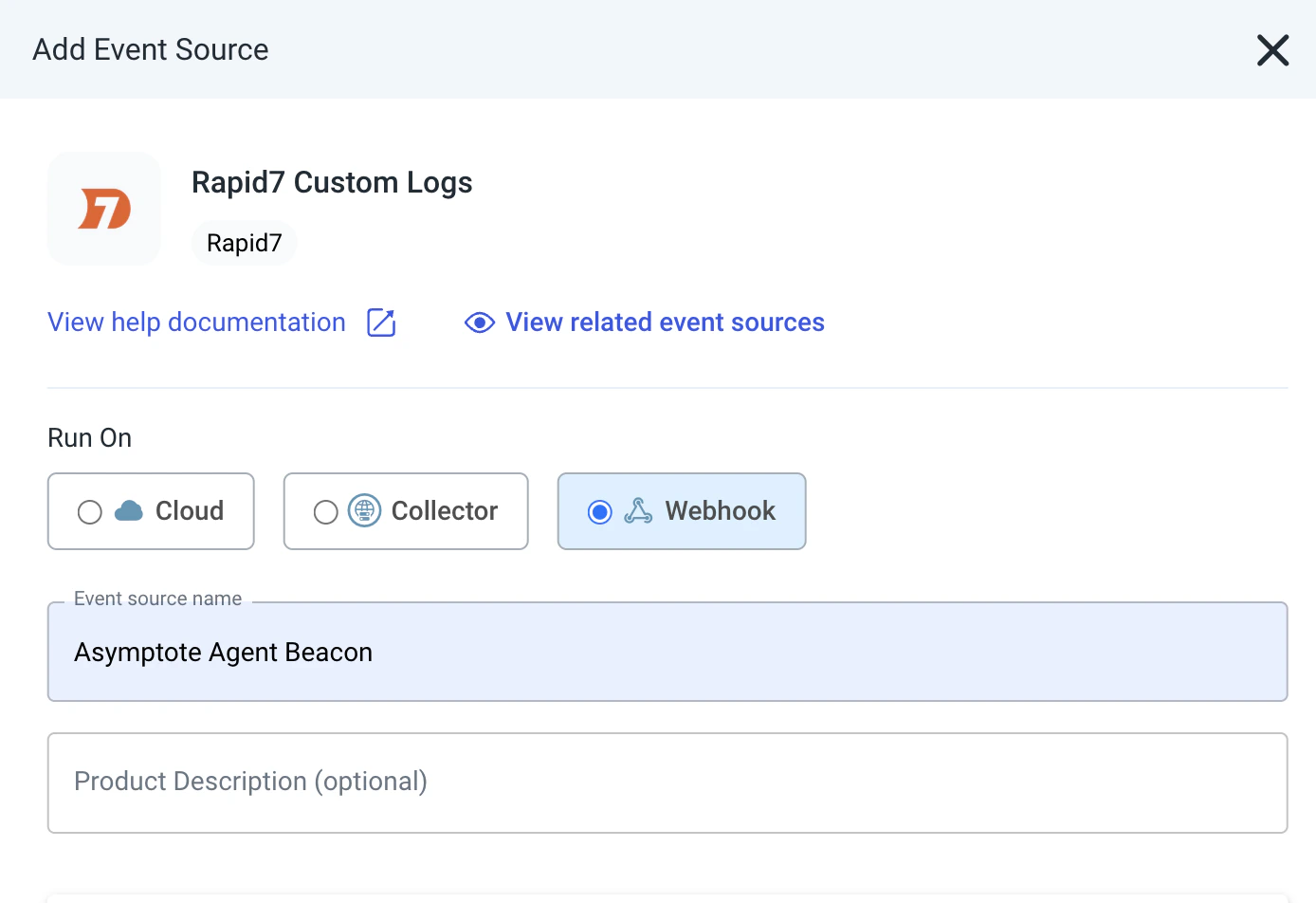
Create a Rapid7 InsightIDR Custom Logs event source with the Webhook collection method.
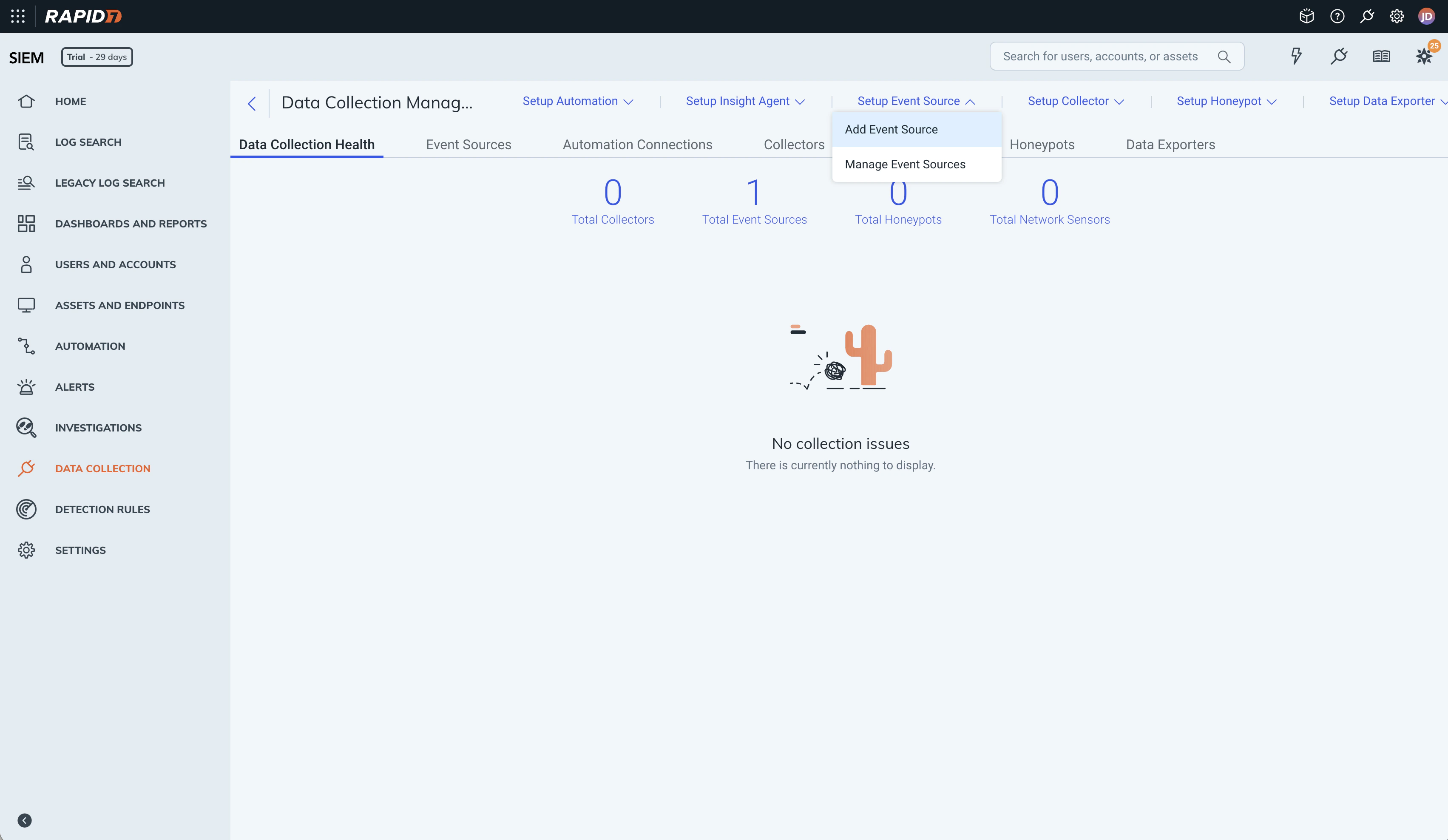 Recommended setup:
```text theme={null}
Data Collection > Setup Event Source > Add Event Source > Raw Data > Custom Logs
Collection Method: Webhook
Name: Asymptote Agent Beacon
JSON Events Key: leave blank for Beacon NDJSON payloads
```
Recommended setup:
```text theme={null}
Data Collection > Setup Event Source > Add Event Source > Raw Data > Custom Logs
Collection Method: Webhook
Name: Asymptote Agent Beacon
JSON Events Key: leave blank for Beacon NDJSON payloads
```
 Rapid7 webhook URLs are bearer destinations. Store the generated URL securely as `RAPID7_WEBHOOK_URL` for smoke testing or in your customer-managed forwarder. Avoid committing it to endpoint configuration or source control.
 ## Install the Rapid7 pack
Generate the Rapid7 content pack for a managed system-mode deployment:
```bash title="Generate the Rapid7 content pack for a managed system-mode deployment" theme={null}
sudo /opt/beacon/bin/beacon endpoint rapid7 install-pack \
--system \
--output ./beacon-rapid7-pack
```
The pack includes:
* `README.md` with setup and validation steps
* `rapid7-upload-smoke-test.sh` for one-shot NDJSON validation uploads
* `vector.toml` for customer-managed Vector forwarding
* `sample-event.jsonl` with Beacon endpoint sample events
If you use a custom Beacon log path, generate the pack with `--log-path /path/to/runtime.jsonl`. The generated `rapid7-upload-smoke-test.sh` and `vector.toml` use the selected path.
## One-shot smoke test
Use the generated smoke-test script to upload the current runtime log once. This is only for validation because it re-uploads the whole file every time.
```bash title="Command example" theme={null}
export RAPID7_WEBHOOK_URL="https://..."
./beacon-rapid7-pack/rapid7-upload-smoke-test.sh
```
You can override the Beacon log path:
```bash title="You can override the Beacon log path" theme={null}
export BEACON_LOG="/var/log/beacon-agent/runtime.jsonl"
```
The script sends `Content-Type: application/x-ndjson` and preserves one Beacon event per line. Rapid7 InsightIDR Custom Logs treats each NDJSON line as an individual event.
## Production forwarding
For production, use the generated Vector config as a customer-managed host-agent forwarding template. Beacon remains the local JSONL producer; Vector tails `runtime.jsonl`, checkpoints file offsets in its `data_dir`, batches Beacon events, and posts newline-delimited JSON to the Rapid7 Custom Logs webhook.
```mermaid theme={null}
flowchart LR
agentHarnesses["Agent harnesses"] -->|"OTLP or hooks"| beaconEndpoint["Beacon endpoint agent"]
beaconEndpoint -->|"writes normalized events"| runtimeLog["runtime.jsonl"]
runtimeLog -->|"file source tails active path"| vectorAgent["Vector host agent"]
vectorAgent -->|"parse_json, batch, retry"| rapid7Webhook["Rapid7 Custom Logs webhook"]
rapid7Webhook -->|"indexes events"| rapid7Search["Rapid7 Log Search"]
endpointMgmt["MDM or secret tooling"] -->|"RAPID7_WEBHOOK_URL"| vectorAgent
```
Install Vector using your normal endpoint management tooling, then copy the generated config into Vector's config directory. On a macOS system-mode Beacon deployment, the generated config tails `/var/log/beacon-agent/runtime.jsonl`:
```bash title="Install Vector using your normal endpoint management tooling, then copy the generated config into Vector's config directory. On a macOS system-mode Beacon deployment, the generated config tails /var/log/beacon-agent/runtime.jsonl" theme={null}
sudo mkdir -p /etc/vector
sudo cp ./beacon-rapid7-pack/vector.toml /etc/vector/beacon-rapid7.toml
export RAPID7_WEBHOOK_URL="https://..."
vector validate /etc/vector/beacon-rapid7.toml
vector --config /etc/vector/beacon-rapid7.toml
```
In managed deployments, provide `RAPID7_WEBHOOK_URL` through the Vector service environment or your MDM/secret tooling. Do not store Rapid7 webhook URLs in Beacon endpoint configuration.
The template expects a Vector version with the `file` source, `remap` transform, and `http` sink. It parses each Beacon JSONL line and re-encodes the original Beacon event as JSON with newline-delimited framing so Rapid7 receives one Beacon event per line, without a Vector wrapper.
If you adapt the config or use another forwarder, it should:
* Checkpoint file offsets.
* Follow Beacon's local file rotation at the active `runtime.jsonl` path.
* Keep each Beacon event as one JSON object per line.
* Batch newline-delimited JSON records.
* Send `Content-Type: application/x-ndjson`.
* Retry transient failures without duplicating the whole file.
* Keep the Rapid7 webhook URL outside Beacon endpoint configuration.
## Validate forwarding
Confirm the Beacon runtime log exists and has recent endpoint events:
```bash title="Confirm the Beacon runtime log exists and has recent endpoint events" theme={null}
sudo /opt/beacon/bin/beacon endpoint status --system --json
sudo test -r /var/log/beacon-agent/runtime.jsonl
```
Write a Rapid7 validation event:
```bash title="Write a Rapid7 validation event" theme={null}
sudo /opt/beacon/bin/beacon endpoint rapid7 validate --system
```
Run the one-shot smoke test or wait for your production forwarder to ship the new line. In Rapid7 Log Search, start with the Custom Logs event source and search for:
```text theme={null}
"Beacon endpoint Rapid7 validation event"
```
You can also confirm normalized Beacon fields are present:
```text theme={null}
vendor=beacon product=endpoint-agent destination.type=rapid7
```
If events do not appear, verify that your forwarder is reading the same runtime log path Beacon writes, that the webhook URL is current, and that each Beacon JSONL line is preserved as a distinct event.
## Content Handling
Beacon applies redaction, sanitization, truncation, and event-size limits before events are written to `runtime.jsonl` and forwarded to Rapid7. Review event source access, retention, and downstream consumers so retained telemetry matches your approved collection policy.
## Related
Review Rapid7 command syntax, flags, and examples.
Review forwarding patterns across Wazuh, Splunk HEC, Falcon LogScale, Elastic, Datadog, Sumo Logic, Rapid7, and customer-managed pipelines.
Review normalized Beacon JSONL fields and example events.
Review supported agent harnesses, deployment modes, storage, and forwarding.
## Install the Rapid7 pack
Generate the Rapid7 content pack for a managed system-mode deployment:
```bash title="Generate the Rapid7 content pack for a managed system-mode deployment" theme={null}
sudo /opt/beacon/bin/beacon endpoint rapid7 install-pack \
--system \
--output ./beacon-rapid7-pack
```
The pack includes:
* `README.md` with setup and validation steps
* `rapid7-upload-smoke-test.sh` for one-shot NDJSON validation uploads
* `vector.toml` for customer-managed Vector forwarding
* `sample-event.jsonl` with Beacon endpoint sample events
If you use a custom Beacon log path, generate the pack with `--log-path /path/to/runtime.jsonl`. The generated `rapid7-upload-smoke-test.sh` and `vector.toml` use the selected path.
## One-shot smoke test
Use the generated smoke-test script to upload the current runtime log once. This is only for validation because it re-uploads the whole file every time.
```bash title="Command example" theme={null}
export RAPID7_WEBHOOK_URL="https://..."
./beacon-rapid7-pack/rapid7-upload-smoke-test.sh
```
You can override the Beacon log path:
```bash title="You can override the Beacon log path" theme={null}
export BEACON_LOG="/var/log/beacon-agent/runtime.jsonl"
```
The script sends `Content-Type: application/x-ndjson` and preserves one Beacon event per line. Rapid7 InsightIDR Custom Logs treats each NDJSON line as an individual event.
## Production forwarding
For production, use the generated Vector config as a customer-managed host-agent forwarding template. Beacon remains the local JSONL producer; Vector tails `runtime.jsonl`, checkpoints file offsets in its `data_dir`, batches Beacon events, and posts newline-delimited JSON to the Rapid7 Custom Logs webhook.
```mermaid theme={null}
flowchart LR
agentHarnesses["Agent harnesses"] -->|"OTLP or hooks"| beaconEndpoint["Beacon endpoint agent"]
beaconEndpoint -->|"writes normalized events"| runtimeLog["runtime.jsonl"]
runtimeLog -->|"file source tails active path"| vectorAgent["Vector host agent"]
vectorAgent -->|"parse_json, batch, retry"| rapid7Webhook["Rapid7 Custom Logs webhook"]
rapid7Webhook -->|"indexes events"| rapid7Search["Rapid7 Log Search"]
endpointMgmt["MDM or secret tooling"] -->|"RAPID7_WEBHOOK_URL"| vectorAgent
```
Install Vector using your normal endpoint management tooling, then copy the generated config into Vector's config directory. On a macOS system-mode Beacon deployment, the generated config tails `/var/log/beacon-agent/runtime.jsonl`:
```bash title="Install Vector using your normal endpoint management tooling, then copy the generated config into Vector's config directory. On a macOS system-mode Beacon deployment, the generated config tails /var/log/beacon-agent/runtime.jsonl" theme={null}
sudo mkdir -p /etc/vector
sudo cp ./beacon-rapid7-pack/vector.toml /etc/vector/beacon-rapid7.toml
export RAPID7_WEBHOOK_URL="https://..."
vector validate /etc/vector/beacon-rapid7.toml
vector --config /etc/vector/beacon-rapid7.toml
```
In managed deployments, provide `RAPID7_WEBHOOK_URL` through the Vector service environment or your MDM/secret tooling. Do not store Rapid7 webhook URLs in Beacon endpoint configuration.
The template expects a Vector version with the `file` source, `remap` transform, and `http` sink. It parses each Beacon JSONL line and re-encodes the original Beacon event as JSON with newline-delimited framing so Rapid7 receives one Beacon event per line, without a Vector wrapper.
If you adapt the config or use another forwarder, it should:
* Checkpoint file offsets.
* Follow Beacon's local file rotation at the active `runtime.jsonl` path.
* Keep each Beacon event as one JSON object per line.
* Batch newline-delimited JSON records.
* Send `Content-Type: application/x-ndjson`.
* Retry transient failures without duplicating the whole file.
* Keep the Rapid7 webhook URL outside Beacon endpoint configuration.
## Validate forwarding
Confirm the Beacon runtime log exists and has recent endpoint events:
```bash title="Confirm the Beacon runtime log exists and has recent endpoint events" theme={null}
sudo /opt/beacon/bin/beacon endpoint status --system --json
sudo test -r /var/log/beacon-agent/runtime.jsonl
```
Write a Rapid7 validation event:
```bash title="Write a Rapid7 validation event" theme={null}
sudo /opt/beacon/bin/beacon endpoint rapid7 validate --system
```
Run the one-shot smoke test or wait for your production forwarder to ship the new line. In Rapid7 Log Search, start with the Custom Logs event source and search for:
```text theme={null}
"Beacon endpoint Rapid7 validation event"
```
You can also confirm normalized Beacon fields are present:
```text theme={null}
vendor=beacon product=endpoint-agent destination.type=rapid7
```
If events do not appear, verify that your forwarder is reading the same runtime log path Beacon writes, that the webhook URL is current, and that each Beacon JSONL line is preserved as a distinct event.
## Content Handling
Beacon applies redaction, sanitization, truncation, and event-size limits before events are written to `runtime.jsonl` and forwarded to Rapid7. Review event source access, retention, and downstream consumers so retained telemetry matches your approved collection policy.
## Related
Review Rapid7 command syntax, flags, and examples.
Review forwarding patterns across Wazuh, Splunk HEC, Falcon LogScale, Elastic, Datadog, Sumo Logic, Rapid7, and customer-managed pipelines.
Review normalized Beacon JSONL fields and example events.
Review supported agent harnesses, deployment modes, storage, and forwarding.